
Back
Updated at: July 12, 2026
Internet of Things (IoT) and Edge Computing: from Sensors to Intelligent Solutions
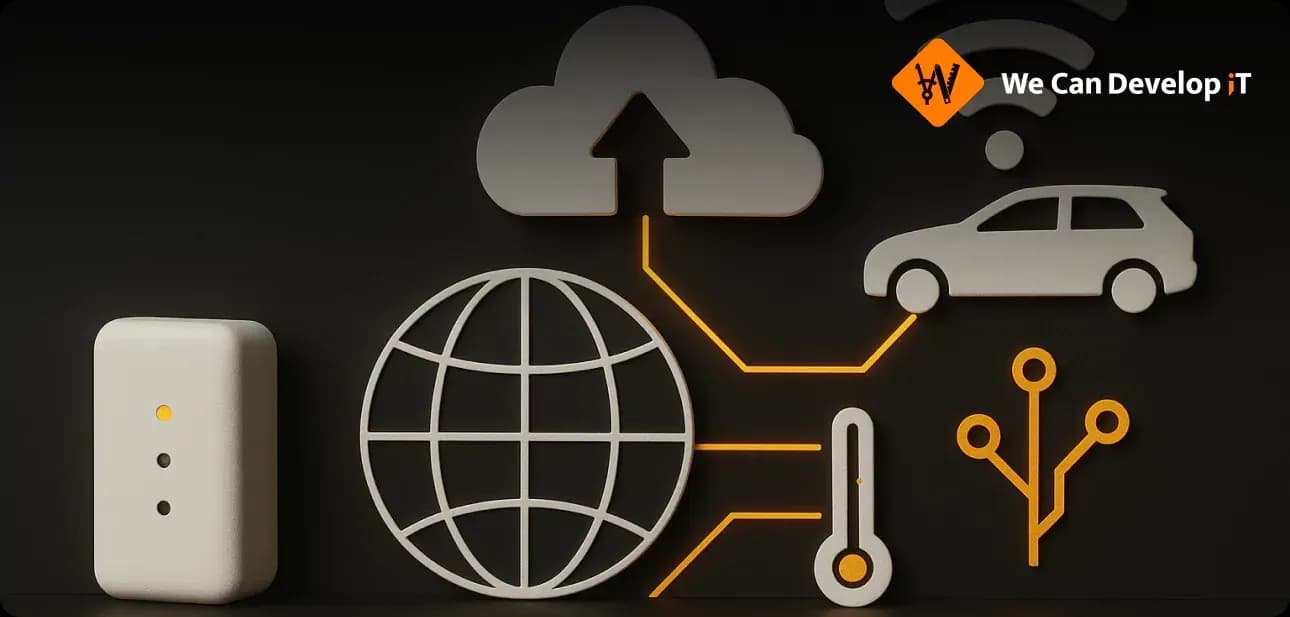
The world is rapidly entering the era of the Internet of Things (IoT) – a network of billions of devices that collect and process data. According to forecasts, by 2030 the number of IoT devices will exceed 29.4 billion. Along with the growth of IoT, edge computing is rapidly developing as well – an approach to data processing as close as possible to the source of its origin, which reduces latency and gives businesses a competitive advantage in response speed.
"Everything that can be connected will be connected." Everything that can be automated will be automated." – Dave Evans, co-founder of IoT-Analytics and former chief futurist at Cisco
Why IoT and Edge Are a Technological Necessity for Businesses
-
Real-time data processing: On-site data processing allows systems to respond in real time – critical for production lines, transportation, and medicine.
-
Optimization of communication channels: No need to transfer terabytes of data to the cloud – only the processing results.
-
Cost reduction: Less traffic, lower cloud expenses, faster decision-making.
-
Increased resilience: Edge devices can continue to operate autonomously, even during communication failures with the center.
-
Predictive maintenance: Using sensors and edge AI to prevent equipment failures.
-
Improved data security: Edge reduces attack surfaces and improves local control.
Common Business Cases: How IoT and Edge Solutions Are Transforming Industries
-
Smart manufacturing: Sensors on machines + edge AI = predictive maintenance and optimized workflows.
-
Logistics and fleet tracking: Monitor assets and shipments in real time, including their geolocation, condition, temperature, and more.
-
Precision agriculture: Smart weather stations and humidity sensors manage irrigation based on real data.
-
Retail automation: Smart shelves and vision systems improve inventory accuracy and ensure automatic restocking of goods.
-
Energy sector: Remote monitoring of facilities and real-time load distribution management.
Popular IoT use cases include asset tracking, smart sensors, remote monitoring, and intelligent automation.
How IoT and Edge Architecture Works
A typical IoT + Edge system includes:
-
Smart devices and sensors – collect data (temperature, motion, vibration, GPS, etc.)
-
Edge computing devices or gateways – process and aggregate data locally..
-
Connectivity – such as 5G, LoRaWAN, Wi-Fi or Ethernet.
-
Cloud platform – for long-term storage, analytics, model training.
-
Business system integrations – CRM, ERP, SCADA for data-driven workflows.
Essential Technological Components for Edge Analytics
-
On-premises processing platforms: AWS IoT Greengrass, Azure IoT Edge, NVIDIA Jetson.
-
Containerization and orchestration: Use Docker, Kubernetes (K3s at the edge), or Podman for lightweight orchestration.
-
AI at the edge: embedding ML models into edge devices (TinyML, ONNX).
-
IoT security: Device authentication, TLS encryption, secure boot, and access control.
-
Integration with ERP/SCADA/CRM: end-to-end automation of business processes.
IoT edge development requires deep expertise in hardware, cloud, security, and systems integration.
Challenges and Nuances of Implementation
-
Custom architecture: Each business needs a custom IoT infrastructure.
-
Software updates and device fleet management: remote management tools are needed.
-
Data standardization: Ensuring consistent formats across devices speeds up integration.
-
Cybersecurity for IoT: Endpoint protection, anomaly detection, and network segmentation are critical to security.
"With each new connected device, your attack surface expands." Without edge protection, you're building a castle with open gates." – Brian Contos, cybersecurity expert, former CISO Fidelis Cybersecurity
Why IoT + Edge Is a Smart Business Investment
The combination of the IoT and edge computing turns data into an asset that works for the business in real time. They are tools for real-time business intelligence, automation, and operational efficiency. In 2024–2025, companies are prioritizing solutions that deliver insights at the source and scale across multiple locations.
Strategic advantage: Faster decisions, lower costs, and better customer experiences.
At We Can Develop IT, we specialize in IoT development and edge computing solutions tailored to your business. From sensor integration to edge AI, from secure device management to analytics dashboards, we build platforms that make your data work for you – securely, instantly, and efficiently.
Let’s talk about how we can accelerate your digital transformation through intelligent edge architecture.
Summary:
The Internet of Things (IoT) is advancing rapidly, connecting billions of devices that gather and process data, with significant increases projected in the coming years. Edge computing complements this growth by enabling data processing near the source, which minimizes latency and enhances response times for businesses. This combination allows for real-time data processing, optimizing communication channels, and reducing costs associated with cloud services. Furthermore, edge computing improves resilience, allowing devices to function autonomously during communication disruptions, while also facilitating predictive maintenance and bolstering data security. Various industries are adopting IoT and edge solutions, transforming sectors such as manufacturing, logistics, agriculture, retail, and energy through enhanced monitoring and automation. Typical IoT and edge systems incorporate smart sensors, local processing devices, and connectivity options, all linked to cloud platforms for comprehensive data management. Key components for effective edge analytics include on-premises processing platforms, containerization technologies, and AI integration, alongside robust security measures. However, successful implementation demands tailored architecture, effective software management, data standardization, and strong cybersecurity practices. The integration of IoT and edge computing is considered a smart investment for businesses seeking real-time intelligence and operational efficiencies. Companies are increasingly focusing on solutions that enhance insights and scalability, reinforcing the strategic advantages of this technology.
Read also:

IoT
EdgeComputing
InternetofThings
SmartSensors
EdgeAI
EdgeAnalytics
RealTimeData
IoTSolutions
IntelligentAutomation
SmartManufacturing
AssetTracking
RemoteMonitoring
IndustrialIoT
IIoT
PrecisionAgriculture
SmartRetail
IoTSecurity
EdgeDevices
IoTDevelopment
CloudIntegration
5GConnectivity
LoRaWAN
EdgeGateway
TinyML
MachineLearning
OnPremiseProcessing
IoTPlatforms
AzureIoTEdge
AWSIoTGreengrass
NVIDIAJetson
Containerization
Kubernetes
IoTArchitecture
DataProcessing
IoTEdgeAI
IoTInfrastructure
DigitalTransformation
SmartTechnology
IoTEdgeUseCases


Head Office: We Develop IT
LLC 1191 Lula Ln
Franklin, TN 37064
Services
Process
Portfolio
Testimonials and Team
Awards and Trends
Blog and news


