
Back
Updated at: July 12, 2026
Low-Code/No-Code: Fast Development Without a Shortage of Programmers
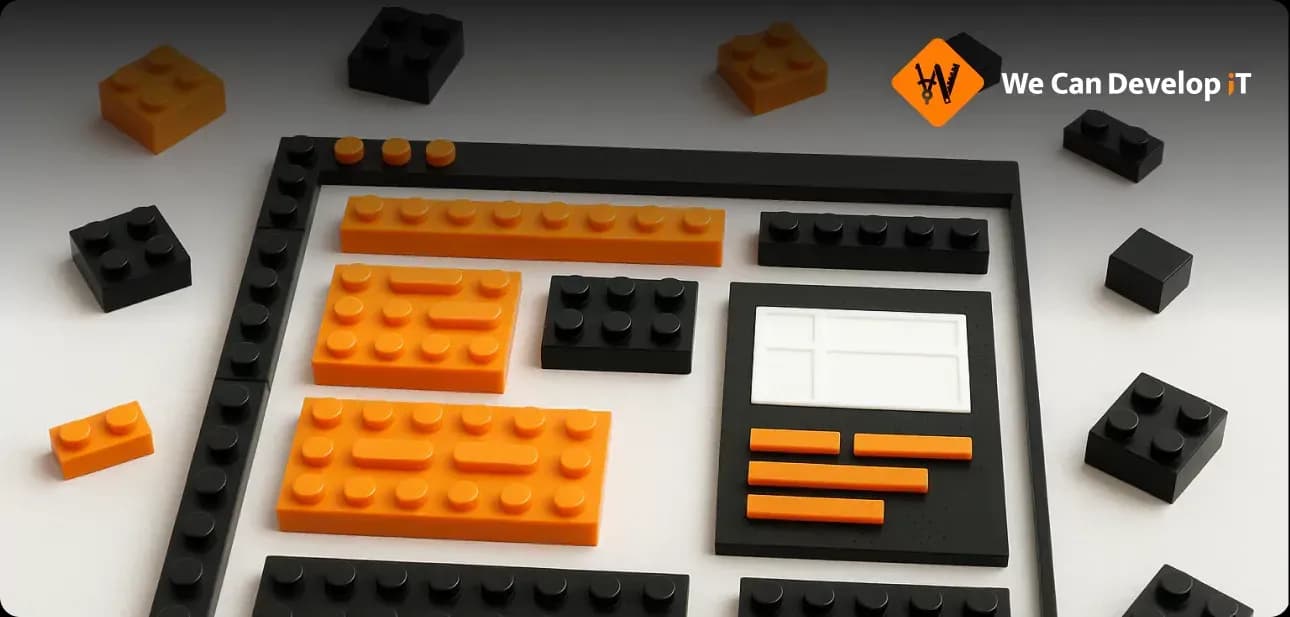
Low-Code and No-Code development technologies are rapidly changing the approach to software creation. Business and IT teams use these digital transformation tools to accelerate processes, automate routine tasks, and prototype ideas without deep programming knowledge.
The market for LC/NC solutions is estimated at $32 billion in 2024, and by 2025, this figure is expected to grow and could exceed $50 billion. What is the reason for the growth and how are companies implementing these platforms for rapid application development?
Why are Low-Code/No-Code platforms gaining popularity?
There are several objective factors that are causing businesses to pay more attention to Low-Code No-Code solutions, which ultimately leads to resource savings and greater flexibility in turbulent conditions:
-
Developer shortage
Companies are facing a shortage of qualified programmers. Enterprise Low-Code platforms allow business analysts and managers to create applications without deep immersion in code - a trend known as citizen development. -
Development speed
The time to create an MVP is reduced from months to weeks or even days. This is facilitated by the availability of numerous ready-made modules (CRM, ERP, document automation), as well as ready integration with APIs and cloud services like Salesforce, Zapier, and Microsoft Power Platform. -
Accessibility for non-tech specialists
Business users can independently automate repetitive tasks without the involvement of the IT department. This is facilitated by drag-and-drop app builders and visual modeling of business processes. For this, minimal training is sufficient.
Where is Low-Code/No-Code being used in 2024-2025?
Highlighting scenarios where LC/NC platforms are truly effective and involving business users in solution creation, companies naturally arrive at the following Low-Code use cases:
-
Improvement of internal business processes:
-
Business process automation, for example, reports and document flow.
-
Creation of internal tools and simple web applications.
-
Simplification and optimization of workflow (for example, approval of requests).
-
Rapid prototyping and MVP versions:
-
MVP for startups without significant costs, often built on No-Code tools for business.
-
Testing hypotheses before full-scale development using LC/NC platforms.
-
Hybrid software development architecture:
-
Low-Code + custom code for complex functions in hybrid Low-Code development.
-
Integration with legacy systems and enterprise infrastructure.
Limitations and challenges of the Low-Code/No-Code approach
Despite the significant advantages of the LC/NC approach, it is important to consider the following nuances:
-
Customization limitations: Complex scenarios still require Pro-Code or separate integration with external systems.
-
Security and scalability: Not all LC/NC platforms are suitable for mission-critical or high-load applications. Security risks and platform limitations must be assessed carefully.
-
Vendor lock-in: Migrating to another Low-Code platform can be costly and labor-intensive.
-
Need for IT control: To avoid shadow IT and architectural chaos, developers and architects should guide LC/NC adoption at the enterprise level.
Real cases of Low-Code/No-Code implementation (2024-2025)
Case 1: Automation of document flow in a bank
Company: European Bank (reduced development costs by 40%).
Solution:
-
Used Microsoft Power Apps to create a loan approval system.
-
Integrated with 1C and DocuSign without writing code.
Result:
-
The application processing time has been reduced from 3 days to 4 hours.
-
Savings of $500K/year on development.
Case 2: MVP for a startup in a week
Startup: Online platform for booking workshops.
Solution:
-
We built a prototype on Bubble.io (No-Code).
-
Integrated payments through Stripe and chat support.
Result:
-
Launching the MVP in 7 days (instead of 2 months).
-
Attracted $200K in investments based on a working prototype.
Case 3: Government services without programmers
Project: Mobile application for scheduling appointments at clinics.
Solution:
-
Developed on OutSystems (Low-Code) by a team of 2 business analysts.
-
Integrated with the EHR system (Epic).
Result:
-
A 30% reduction in the load on call centers.
-
Development was three times cheaper than the traditional method.
The future of Low-Code/No-Code
Analysts link the prospects and trends of the Low-Code/No-Code market with the increasing involvement of AI, as well as the intensive and extensive development - the improvement of internal functionality and expansion into adjacent domains such as education, healthcare, and the public sector.
-
AI assistants: Growing interest in AI-driven Low-Code platforms - automatic generation of user interfaces, logic, and data integrations (logic generation through NLP, like in ChatGPT).
-
Hybrid models: Creating hybrid teams where business and technical specialists collaborate using the same enterprise Low-Code platforms.
-
Related areas of development: Expanding from CRM to building ML pipelines without coding
-
Expansion in the B2B segment and enterprise-grade solutions: LC/NC tools are becoming strategic enablers, not just startup utilities.
At We Can Develop IT, we help businesses unlock the potential of Low-Code and No-Code platforms without compromising flexibility or scalability.
We will analyze your future project, design a scalable Low-Code architecture, identify areas where LC/NC can be effectively applied, and select the optimal platform to achieve your business goals.Let’s accelerate your development process – smartly and strategically.
Contact us to explore how Low-Code/No-Code can work for your business.
Summary:
Low-Code and No-Code (LC/NC) development technologies are transforming software creation by enabling business and IT teams to accelerate processes and automate tasks without extensive programming knowledge. The market for these solutions is projected to grow significantly, driven by factors such as a shortage of qualified programmers and the need for faster development speeds. Companies are increasingly adopting LC/NC platforms to empower non-technical users to create applications independently, which streamlines internal business processes and facilitates rapid prototyping. Common use cases include automating document flows, developing internal tools, and creating minimum viable products (MVPs) for startups. However, challenges remain, including limitations in customization, potential security risks, vendor lock-in issues, and the necessity for IT oversight to prevent chaotic implementations. Real-world examples illustrate the effectiveness of LC/NC solutions, such as a bank reducing document processing time significantly and a startup launching an MVP in just days. The future of LC/NC is likely to be influenced by advancements in artificial intelligence, hybrid development models, and an expansion into various sectors like education and healthcare. These platforms are becoming essential tools for businesses, not just for startups, as they evolve into strategic assets for enterprise-level solutions. As companies navigate this landscape, the importance of selecting the right LC/NC platform and architecture will remain critical to achieving their development goals. Organizations can benefit from expert guidance to unlock the full potential of these technologies while maintaining flexibility and scalability.
Read also:


lowcode
nocode
lowcodenocode
lowcodeplatforms
nocodeplatforms
appbuilder
draganddropbuilder
citizendevelopment
rapidapplicationdevelopment
lowcodeai
lowcodecrm
lowcodeerp
lowcodedevelopment
nocodetools
nocodemvp
bubbleio
outsystems
microsoftpowerapps
visualappbuilder
nocodesaas
enterpriseautomation
nocodebusinessapps
lowcodeusecases
nocodeworkflow
nocodeforstartups
lowcode2024
nocode2025
buildappswithoutcode


Head Office: We Develop IT
LLC 1191 Lula Ln
Franklin, TN 37064
Services
Process
Portfolio
Testimonials and Team
Awards and Trends
Blog and news


